Apache RR 310 Review

Photo Courtesy: TVS India


Basics and looks
In 2016, TVS completed it 35 years of racing bike segment, and they celebrated it by showcasing their concept car Akula in 2016 Auto Expo.
Akula, a Russian term which means ‘shark’. On Dec 6th, 2017, TVS launched their flagship bike Apache RR 310. It was the same concept car they showcased in 2016 Auto Expo, but they thought it would be better to name it under their flagship Apache series.
It is TVS’s most powerful bike ever made. In the expo, it took away the breaths of the audience just by its looks. The looks are so powerful that, at first glance, one may mistake it for Ducati or a superbike.
Apache RR 310 is the road version of concept bike Akula (which means shark). If you have a good look from the front, you can see a predator waiting to be unleashed to leap upon and tear everything down whatever comes on its way.
The headlights and front frame give a feel of shark face and, from the rear, you can see the glowing break light and it resembles the wings of the devil. Yes, it’s a demon coming from hell for all other bikes.


People are rushing to showrooms for just a glimpse of this bike, and lech upon it.
Photo Courtesy: TVS India

SPECIFICATION 

ENGINE & PERFORMANCE

Type                                        SI, 4 strokes, 4 valves, Single cylinder, Liquid cooled,                                                               Reverse inclined
Engine capacity                       312.2cc
Maximum power                     25 kW @ 9700 engine rpm (34 PS @ 9700 engine rpm)
Maximum torque                     27.3 Nm @ 7700 engine rpm
Bore                                         80 mm
Stroke                                      62.1 mm
Carburettor/Fuel injection        Bosch- Closed-loop EFI
Bore to stroke ratio                    1.29

CHASSIS AND SUSPENSION

Frame                          Trellis frame, split chassis
Front Suspension        Inverted cartridge telescopic Fork
Rear suspension         Two arm Aluminium die-cast swingarm Monotube floating piston gas                                     assisted shock absorber

FUEL TANK CAPACITY

Full            11 litres

DIMENSION

Height                                   1135 mm
Length                                  2001 mm
Width                                    786 mm
Wheelbase                         1365 mm
Ground clearance            180 mm
Saddle height                    810 mm

WHEEL AND TYRE

Rim size (front) MT 3.0x17
Rim size (rear)                   MT 4.0x17
Tyre size (front)                110/70-R17 M/C 54H Tubeless
Tyre size (rear)  150/60-R17 M/C 66H Tubeless 

BRAKE

FrontDisc             300mm Petal-type with ABS
RearDisc               240mm Petal-type with ABS
Brake fluid                 DOT 4

PERFORMANCE

Max speed                                         160 km/h
Acceleration                                       0-2sec in km/h46.77 km/h
0-60km/h (time in sec)                    2.93 s


0-100km/h (time in sec)                 7.17s

Hot air adjustment
Air flowing through the engine is pushed downwards by the new design and even the cooling fan is designed in such a way that the hot air is pushed down
Photo Courtesy: TVS India

Performance and ride quality.
It is not just the good looks and mass appearance, TVS has included all the tricks rolled up in its sleeves in this model. All the technology and R&D and 35 years of TVS’s experience can be seen in this RR 310 model.
TVS has worked alongside BMW to develop this bike and since most parts have been borrowed from BMW G310R. But don’t worry, it’s not a copy of G310R, it is much more than just a combination of technology and know-how of both companies.
Let’s start with the engine, which defines every automobile. With 312.2cc BMW engine and fuel injection developed by Apache gives it more power on the higher rev end.
Chassis being borrowed from the G310R which looks beautiful and fits well with the position and angle of the engine. Even the engine’s position is different in this model; placed slightly slanted and backward, giving it a longer swingarm while keeping wheelbase short, providing agility and stability to the bike.
The body of the bike is not just for a show. TVS has designed the body to give it a wind tunnel design and lowest drag coefficient. All these setups add up to give it a top speed of 160kph, while BMW G310R has a top speed of just 143 kph. Even though this bike is branded as a sports bike, and is designed to lap faster, they have tuned the suspension to be softer, so that the rider can be comfortable when he is on a daily commuting and not in a race track.
Tyres are good, but not good enough for this bike, though the given set of tyres are doing justice to the bike, especially at this potential and high speed (sometimes it struggles a bit for grip though).
On city roads, you will be comfortable in these tyres.
Breaks are also good but there a bit of less feedback from the front breaks but it is not noticeable. There is a bit of vibration above 6k rpm but it’s not a big deal


The seat is small for the pillion rider, and those vibrations can be heard from few plastic parts on the bike.
Photo Courtesy: TVS India

Price: 2,26,000 INR (ex-showroom)
Final verdict
Looks and design: 10/10
Specs & features: 9/10
Dynamics & performance: 9/10
Safety & quality: 9/10
After-sale service: 8/10
It is a serious racer bike which can hit both street and track with same agility, power and style.
Recommended for those who care about good-looks and serious performance, and it is not meant for long distance cruising; even though you can do it.
Guys of any height can ride it comfortably, but check once how you look seated on the bike.


If you like this review, subscribe to our blog to receive quick notifications of our updates.  And comment below if you have any doubts regarding this article 

Ford Endeavour/Everest Review

Photo Courtesy: Ford India

The name Ford Endeavour/Everest is familiar to many of us. But we haven’t seen this car as much as other SUVs on the road. There is a reason you haven’t seen this car and there is another reason you are going to see this one more often on the roads from now on.

Third Generation Boy
Ford Endeavour/Everest is its 3rd generation car in its Endeavour/Everest series. It was first launched in 2003, and it was a big car with a boxy look which is common in its series.

The first two in the series were not that good, or good enough that someone would recommend you to buy it. It was an SUV of course, but, wasn’t good for off-roading.
The interiors weren’t that impressive nor the overall style.

But the 3rd generation Endeavour/Everest changed it all with new, different and old boxy look with a muscular frame. A lot of work has been put on it, from the front to back and sidewise everything has changed.
18-inch tyres with alloy wheels which makes the car look big like it can counter any obstacle on the way.

Photo Courtesy: Ford India


Specifications

ENGINE & TRANSMISSION         
Top Speed                                       178kph
Engine Displacement(cc)                2198
Maximum Power                             158bhp@3200rpm
Maximum Torque                            385Nm@1600-2500rpm
Engine Description                          2.2 Litre 158bhp 16V Diesel Engine
No. of Cylinders                               4
Drive Type                                       FWD
Turbo Charger                                 Yes
Super Charger                                 No
Valves Per Cylinder                         4
Fuel Supply System                         TDCi
Gearbox                                          6 Speed
Steering Gear Type                         Rack & Pinion
CAPACITY           
Seating Capacity                              7
No of Doors                                      5
Length                                              4892mm
Width                                                1860mm
Height                                               1837mm
Ground Clearance                            225mm
Ground Clearance Unladen              null
Wheel Base                                      2850mm
Front Tread                                       1475mm
Rear Tread                                        1470mm
Kerb Weight                                      1879kg
Fuel Tank Capacity (Liters)               80
Tyre Size                                           265/60 R18
Tyre Type                                          Tubeless, Radial

Alloy Wheel Size                               18 Inch

Interiors and Design

Talking about the interior, it’s spacey and when you enter inside you can feel the size of the car. You can sit anywhere with comfort and ease, and the middle row seats being a bit low but no compromise is done on comfort.
To access the 3rd row, you might have to squeeze in a little, but it’s a problem for tall guys, people with average height will have no problem. Consider the last row for children and remaining for adults.

The instrument cluster is available in both analogue and digital system and the arrangement is really good and easy to access and read. The analogue part showing the speed and other essentials and digital part show you everything from rpm to angle of the car.

Photo Courtesy: Ford India


Driving Experience

The driving modes are sand, snow, rock with changes in gear ratio throttle response so that the car can get maximum traction on all surface.
The infotainment system is good as it has got 10 speakers with sub-woofers and sound quality is really awesome. Along with this, it has noise cancellation system with 3 mikes placed in the cabin which collects the noise info and speakers produce a sound which has exactly opposite wavelengths which cancel the noise, giving silent and quite feeling in the cabin (only if you are not playing a hard rock song, lol).

Photo Courtesy: Ford India


Speakers volume is adjusted depending on the noise outside the car. It has the hill descent control system and can pass a lake or a river till 800mm depth without any difficulty.

The weight of Endeavour/Everest is more than 2 tons, but the power it generates is enough to take you anywhere with ease.

It can go for off-roading and counter mild obstacles on the way. It is also good at curvy roads and will take you to long journeys without any problem. The size and weight of the car will never be a problem in the tours you make.

It is stable in cornerings, they have a tuned suspension setup a bit stiff compared to its rivals. You can feel that in 2nd and 3rd-row seats on bad roads at low speed. But none of this will not take away you overall comfortable ride. Even though it is almost a 5m long car, you can easily take U-turns with ease and comfort.

Photo Courtesy: Ford India


Steering is good as usual, as you take on the speed, the weight increases. It has a disc brake on all 4 wheels, so the car has a really good grip on the road and giving confidence to the driver.
The Endeavour is a really good cruiser but, I’m not sure about the city drive. It might be as good as expected. You can enjoy serious off-roading only in a 4WD variant, RWD variant being good at regular lose surface and flat off-road with ease.


Price: 31,04,965- 39,15,178 INR (ex-showroom)


Final Verdict
Looks and design: 8/10
Specs & features: 8/10
Dynamics & performance: 7/10
Safety & quality: 9/10
After-sale service: 9/10

This car is best for people who like s to go long cruising and mild off-roading(4WD). And remember, it’s not a sports car type.


If you like this review, subscribe to our blog to receive quick notifications of our updates.  And comment below if you have any doubts regarding this article and let us know if you wish to see a review of any particular automobile. And e-mail us for further queries.


The History Of Wheels


We all know that wheels are the part of the car which is the ultimate part which makes it able to move from place to place. It is an easy method, ‘engines give power to wheels and wheels turns and cars move.
But how many of us know the wheels are not powered or controlled by the engine in the same way.
In this article, we will concentrate on the engine’s placement and engine-wheel connection of the vehicles.


The origin of four-wheel vehicle
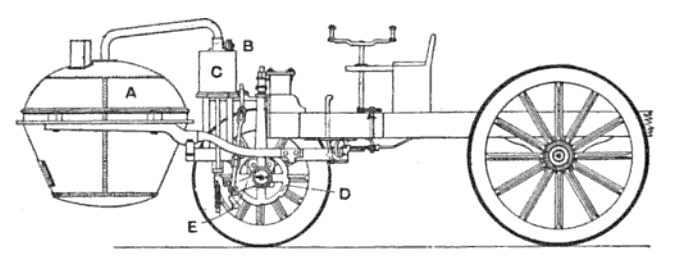
The first ever auto-mobile made was in 1769, with wooden body and tires. It ran on steam engine embedded on the front part of the vehicle. The engine was connected to the front wheel and was called front engine front wheel drive (FWD/FF) car.


The car was a successful prototype and was stated commercialization. But the car was really heavy and big compared to the power the engine released. Manual steering was a difficult thing at that time and made it very tough to drive.
As time passed, the size of the engine decreased and power increased. The position of the engine remained the same and it powered the front wheels.


Who Were The Pioneers
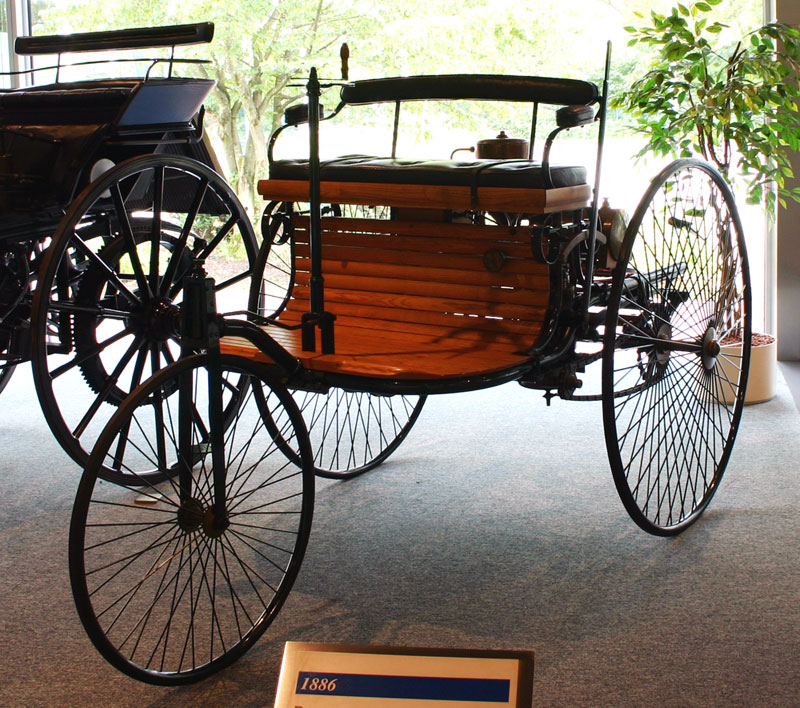
It was the Benz which made the first internal combustion engine and positioning it in the rear of the car. It was the first rear engine rear wheel drive (RWD) car.


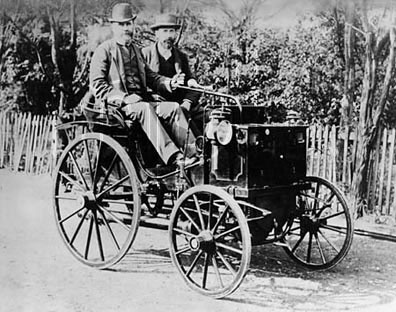
Panhard, a French manufacturer of light tactical and military vehicles created the first ever front engine rear wheel drive car, which changed the thought that engine can only be in front powering the front wheel. The front engine rear wheel drive was easier to make than Front engine front wheel drive.


Bramah Joseph Diplock, an English inventor made a first four-wheel drive (4WD) car in 1893. With 4WD the traction of the car increased by which rough terrain drive got easier.


In 1900, first ever mid-engine rear wheel drive (RMR) car was made. It was NW Rennzweier. It was the first racing car with 12hp.


The Front Wheel Drive
Nowadays, most of the cars produced are FWD, and it is because of the ease of production which reduces the cost of making and, it gives better traction and giving max grip in the front because of the engine’s weight.

As FWD cars are most suitable for city and commuting purposes, it is not considered good for performance cars. FWD cars usually concentrate on the economy and general population.


The Rear Wheel Drive
In RWD cars, the engine is in the front and power is transferred to the rear wheels. Being heavier on the front because of the engine, the grip of the rear wheels is always lesser than the front wheel. But nowadays, the companies are adjusting the weight of vehicles so that it has a proper grip on all wheels. Some cars are now having 50-50 weight distribution.
This types of car are popular as people love driving FWD as it is easy to handle and fast, and it will remain same for a long time.


The Rear Engine Rear Wheel Drive
Rear engine rear wheel (RR) cars still exist, and this arrangement is mostly used by Porsche and Volkswagen. In this arrangement, the position of the engine is at the rear and the rear wheels are powered. It had a problem of developing less grip on the front wheels and making it tougher on the curves. But, Porsche has mastered the technique to distribute the weight properly and to manage the grip of the car.
The Rear-mid Engine, Rear Wheel Drive
Rear mid-engine, rear wheel (RMR) cars are popular in racing cars. In this arrangement, the engine is set just ahead of the rear wheel and the rear-wheel is powered by it. Weight distribution is properly done in this arrangement.


The Four Wheel Drive
Four-wheel drive (4WD) cars are usually off-roaders and it is because all wheels are powered equally by the engine. 4WD cars have different lock options depending on the surface they are riding and can adjust the powering of wheels. Whether the car is going on low range, high range, it has gear options to adjust according to that.


The All Wheel Drive
All-wheel drive (AWD) cars are for mild off-roading and city driving. The power distributed to all wheels are adjusted as per the situation.
All the wheels are given power according to that instant by the system embedded in the car. The AWD system cuts the power of the wheel with least traction. This system is mostly used by rally cars and sports cars. Even super and hypercars use this technology. This system is safe and gives most traction, but it’s not suitable for off-roading.
How it differs from 4WD will be discussed in another post by us.


And the latest addition to the list
The latest entry is of the IWD cars. You may be wondering about what the “I” stands for?
It is the latest technology embedded in the electric cars, and it means, ‘ Individual Wheel Drive’.
The cars will have individual motors for each wheel and power them when required in different situation. Controlled and monitored by the computer system in the car, it becomes real ease for the driver to ride the car.


Many other experiments are going on in the industry to make the driving experience smooth and comfortable for the driver. It is just a few years wait and we will be seeing a new type of arrangement in the driving system of cars.


If you like this post, subscribe to our blog to receive quick notifications of our updates.  And comment below if you have any doubts regarding this article and let us know if you wish to see a review of any particular automobile. And e-mail us for further queries.

Yamaha FZ25 Review


Photo Courtesy: YAMAHA India


Launch
Yamaha launched its FZ model in 2008, and it was a hit already. From that time people are always excited to when Yamaha launches a new bike in its FZ series.
Yamaha FZ25 is Yamaha’s first 250cc bike in India that was launched in February 2017.


Specifications

ENGINE
Petrol
Fuel Type
Petrol
Bore/Stroke (mm)
74/58mm
Max Power (hp @ rpm)
20.9hp at 8000rpm
Max Torque (nm @ rpm)
20Nm at 6000rpm
Type
249cc, single-cylinder, air-cooled,
fuel injected, 4-stroke
TRANSMISSION
Petrol
No of Gears
Five-speed

Dimensions & Chassis
Petrol
Length (mm)
2015mm
Width (mm)
770mm
Height (mm)
1075mm
Wheel base (mm)
1360mm
Ground Clearance (mm)
160mm
BRAKES
Petrol
Front Brake Type
282mm disc
Rear Brake Type
220mm disc

SUSPENSION
Petrol
Front Suspension
Telescopic fork
Rear Suspension
Monocross
BODY
Petrol
Construction
Diamond frame chassis
Weight
148kg
Tyres
(F-R) 100/80-17M/C 52P - 140/70-17M/C 66S

Photo Courtesy: YAMAHA India


Looks and Design

It’s a quite muscular and good looking bike, as Yamaha always does, they have given it a sharp look and stunning style.
With small sharp headlamps and bulging heavy muscular tank is a sight to see. It gives a stunning look from the front
From the back side, it’s as good as the front.

It has a simple rectangular instrument cluster with all required things covered. It left the gear indicator but, its clean and very well set up and easy to read.

Photo Courtesy: YAMAHA India


Ride Quality and Comfort

When it comes to riding quality, it has got the same suspension from the FZ15 and it has been setup soft in the front and stiff at the back.

Riding is smooth on good and moderately damaged roads. On rough roads, it can’t take it. Seating position and posture is really good and, it is comfortable for longer rides.

It is considered a sports bike but, it is not that sporty compared to its older versions. You will understand at the end of review why we said that.

We know that the mileage is all you were thinking while reading the review, and of course, for a 250cc bike, mileage is a deciding factor for many riders in the buying process.
FZ25 gives a mileage of 38kmpl with 14 L capacity. It can cover almost 532km with ease and comfort.

Photo Courtesy: YAMAHA India


The previous version of FZ, i.e., FZ15, it lacked a bit of power and grunt to back its powerful looks. But with a 250cc engine, there are no such issues in the new model.
The power delivery is gradual and linear, and with a punch, it can hit 0-60kph in 3.4secs.

The engine is really well defined which is usually expected from Yamaha. But above 7000rpm, there is a bit of vibration felt in the handlebar, but not much of a problem.
As the suspension setup is different and low profile tyres, FZ25 is not that edgy, it smoothly changes its direction. Yamaha has brought many sports bike in India, this time they have brought a comfortable and easy to ride long distance touring bike.
But without ABS it decreases a bit of confidence in the rider.

Brakes are good and effective but, in some cases, there are chances that you will lock your rear wheel and will not be able to control it. It will be resolved this year itself with ABS.

FZ25 should have made a 6-speed gearbox which would have helped in cruising smoothly at high speed.

The bike is really good for city and highways. It’s not that good at corners and for sharp turns like a sports bike.

Photo Courtesy: YAMAHA India


Price: 135000 INR (ex-showroom)

Final Verdict
Looks and design: 8/10
Specs & features: 9/10
Dynamics & performance: 8/10
Safety & quality: 7.5/10
After-sale service: 9/10

The Yamaha FZ25 is well suited for people who like powerful sporty bikes for both cruising and for short distance journey.


If you like this review, subscribe to our blog to receive quick notifications of our updates.  And comment below if you have any doubts regarding this article and let us know if you wish to see a review of any particular automobile. And e-mail us for further queries.