The History Of Wheels


We all know that wheels are the part of the car which is the ultimate part which makes it able to move from place to place. It is an easy method, ‘engines give power to wheels and wheels turns and cars move.
But how many of us know the wheels are not powered or controlled by the engine in the same way.
In this article, we will concentrate on the engine’s placement and engine-wheel connection of the vehicles.


The origin of four-wheel vehicle
The first ever auto-mobile made was in 1769, with wooden body and tires. It ran on steam engine embedded on the front part of the vehicle. The engine was connected to the front wheel and was called front engine front wheel drive (FWD/FF) car.
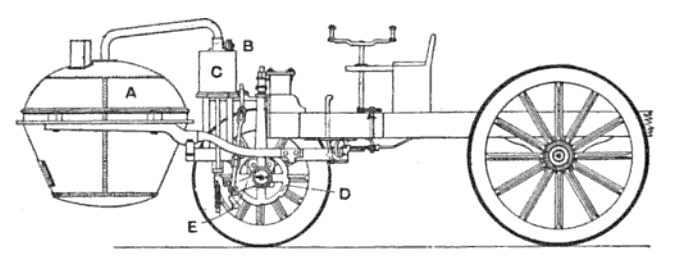


The car was a successful prototype and was stated commercialization. But the car was really heavy and big compared to the power the engine released. Manual steering was a difficult thing at that time and made it very tough to drive.
As time passed, the size of the engine decreased and power increased. The position of the engine remained the same and it powered the front wheels.


Who Were The Pioneers
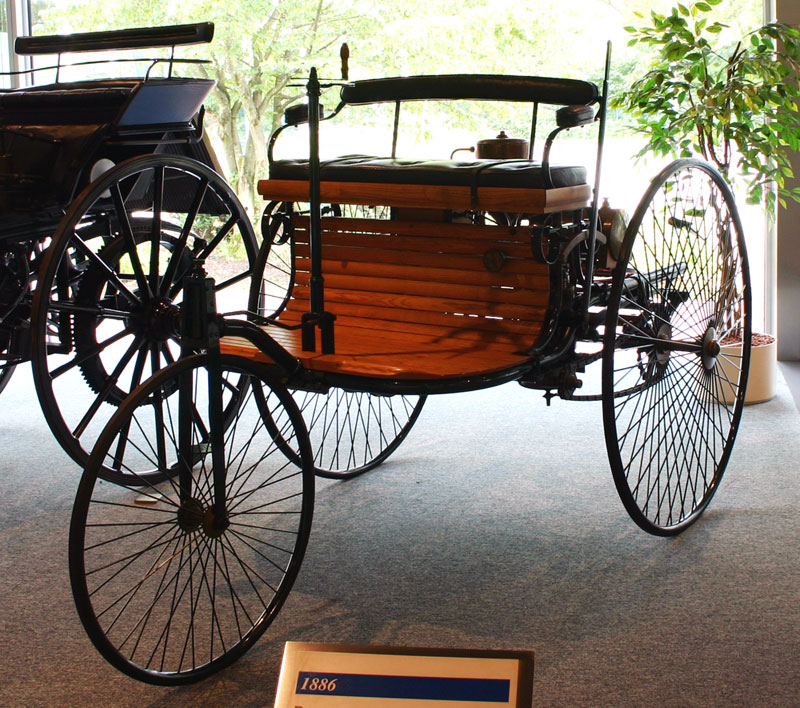
It was the Benz which made the first internal combustion engine and positioning it in the rear of the car. It was the first rear engine rear wheel drive (RWD) car.


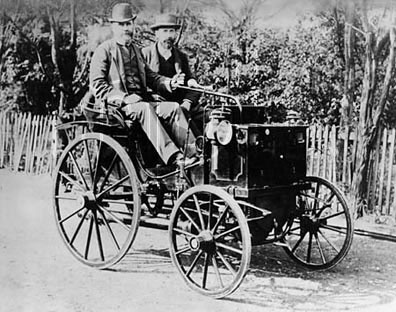
Panhard, a French manufacturer of light tactical and military vehicles created the first ever front engine rear wheel drive car, which changed the thought that engine can only be in front powering the front wheel. The front engine rear wheel drive was easier to make than Front engine front wheel drive.


Bramah Joseph Diplock, an English inventor made a first four-wheel drive (4WD) car in 1893. With 4WD the traction of the car increased by which rough terrain drive got easier.


In 1900, first ever mid-engine rear wheel drive (RMR) car was made. It was NW Rennzweier. It was the first racing car with 12hp.


The Front Wheel Drive
Nowadays, most of the cars produced are FWD, and it is because of the ease of production which reduces the cost of making and, it gives better traction and giving max grip in the front because of the engine’s weight.

As FWD cars are most suitable for city and commuting purposes, it is not considered good for performance cars. FWD cars usually concentrate on the economy and general population.


The Rear Wheel Drive
In RWD cars, the engine is in the front and power is transferred to the rear wheels. Being heavier on the front because of the engine, the grip of the rear wheels is always lesser than the front wheel. But nowadays, the companies are adjusting the weight of vehicles so that it has a proper grip on all wheels. Some cars are now having 50-50 weight distribution.
This types of car are popular as people love driving FWD as it is easy to handle and fast, and it will remain same for a long time.


The Rear Engine Rear Wheel Drive
Rear engine rear wheel (RR) cars still exist, and this arrangement is mostly used by Porsche and Volkswagen. In this arrangement, the position of the engine is at the rear and the rear wheels are powered. It had a problem of developing less grip on the front wheels and making it tougher on the curves. But, Porsche has mastered the technique to distribute the weight properly and to manage the grip of the car.
The Rear-mid Engine, Rear Wheel Drive
Rear mid-engine, rear wheel (RMR) cars are popular in racing cars. In this arrangement, the engine is set just ahead of the rear wheel and the rear-wheel is powered by it. Weight distribution is properly done in this arrangement.


The Four Wheel Drive
Four-wheel drive (4WD) cars are usually off-roaders and it is because all wheels are powered equally by the engine. 4WD cars have different lock options depending on the surface they are riding and can adjust the powering of wheels. Whether the car is going on low range, high range, it has gear options to adjust according to that.


The All Wheel Drive
All-wheel drive (AWD) cars are for mild off-roading and city driving. The power distributed to all wheels are adjusted as per the situation.
All the wheels are given power according to that instant by the system embedded in the car. The AWD system cuts the power of the wheel with least traction. This system is mostly used by rally cars and sports cars. Even super and hypercars use this technology. This system is safe and gives most traction, but it’s not suitable for off-roading.
How it differs from 4WD will be discussed in another post by us.


And the latest addition to the list
The latest entry is of the IWD cars. You may be wondering about what the “I” stands for?
It is the latest technology embedded in the electric cars, and it means, ‘ Individual Wheel Drive’.
The cars will have individual motors for each wheel and power them when required in different situation. Controlled and monitored by the computer system in the car, it becomes real ease for the driver to ride the car.


Many other experiments are going on in the industry to make the driving experience smooth and comfortable for the driver. It is just a few years wait and we will be seeing a new type of arrangement in the driving system of cars.


If you like this post, subscribe to our blog to receive quick notifications of our updates.  And comment below if you have any doubts regarding this article and let us know if you wish to see a review of any particular automobile. And e-mail us for further queries.

Yamaha FZ25 Review


Photo Courtesy: YAMAHA India


Launch
Yamaha launched its FZ model in 2008, and it was a hit already. From that time people are always excited to when Yamaha launches a new bike in its FZ series.
Yamaha FZ25 is Yamaha’s first 250cc bike in India that was launched in February 2017.


Specifications

ENGINE
Petrol
Fuel Type
Petrol
Bore/Stroke (mm)
74/58mm
Max Power (hp @ rpm)
20.9hp at 8000rpm
Max Torque (nm @ rpm)
20Nm at 6000rpm
Type
249cc, single-cylinder, air-cooled,
fuel injected, 4-stroke
TRANSMISSION
Petrol
No of Gears
Five-speed

Dimensions & Chassis
Petrol
Length (mm)
2015mm
Width (mm)
770mm
Height (mm)
1075mm
Wheel base (mm)
1360mm
Ground Clearance (mm)
160mm
BRAKES
Petrol
Front Brake Type
282mm disc
Rear Brake Type
220mm disc

SUSPENSION
Petrol
Front Suspension
Telescopic fork
Rear Suspension
Monocross
BODY
Petrol
Construction
Diamond frame chassis
Weight
148kg
Tyres
(F-R) 100/80-17M/C 52P - 140/70-17M/C 66S

Photo Courtesy: YAMAHA India


Looks and Design

It’s a quite muscular and good looking bike, as Yamaha always does, they have given it a sharp look and stunning style.
With small sharp headlamps and bulging heavy muscular tank is a sight to see. It gives a stunning look from the front
From the back side, it’s as good as the front.

It has a simple rectangular instrument cluster with all required things covered. It left the gear indicator but, its clean and very well set up and easy to read.

Photo Courtesy: YAMAHA India


Ride Quality and Comfort

When it comes to riding quality, it has got the same suspension from the FZ15 and it has been setup soft in the front and stiff at the back.

Riding is smooth on good and moderately damaged roads. On rough roads, it can’t take it. Seating position and posture is really good and, it is comfortable for longer rides.

It is considered a sports bike but, it is not that sporty compared to its older versions. You will understand at the end of review why we said that.

We know that the mileage is all you were thinking while reading the review, and of course, for a 250cc bike, mileage is a deciding factor for many riders in the buying process.
FZ25 gives a mileage of 38kmpl with 14 L capacity. It can cover almost 532km with ease and comfort.

Photo Courtesy: YAMAHA India


The previous version of FZ, i.e., FZ15, it lacked a bit of power and grunt to back its powerful looks. But with a 250cc engine, there are no such issues in the new model.
The power delivery is gradual and linear, and with a punch, it can hit 0-60kph in 3.4secs.

The engine is really well defined which is usually expected from Yamaha. But above 7000rpm, there is a bit of vibration felt in the handlebar, but not much of a problem.
As the suspension setup is different and low profile tyres, FZ25 is not that edgy, it smoothly changes its direction. Yamaha has brought many sports bike in India, this time they have brought a comfortable and easy to ride long distance touring bike.
But without ABS it decreases a bit of confidence in the rider.

Brakes are good and effective but, in some cases, there are chances that you will lock your rear wheel and will not be able to control it. It will be resolved this year itself with ABS.

FZ25 should have made a 6-speed gearbox which would have helped in cruising smoothly at high speed.

The bike is really good for city and highways. It’s not that good at corners and for sharp turns like a sports bike.

Photo Courtesy: YAMAHA India


Price: 135000 INR (ex-showroom)

Final Verdict
Looks and design: 8/10
Specs & features: 9/10
Dynamics & performance: 8/10
Safety & quality: 7.5/10
After-sale service: 9/10

The Yamaha FZ25 is well suited for people who like powerful sporty bikes for both cruising and for short distance journey.


If you like this review, subscribe to our blog to receive quick notifications of our updates.  And comment below if you have any doubts regarding this article and let us know if you wish to see a review of any particular automobile. And e-mail us for further queries.

Hyundai Elantra Review


Photo Courtesy: Hyundai India


Launch
The latest Hyundai Elantra was launched in India in December, 2016.


The recently launched Hyundai Elantra is the 6th generation in its series. It’s not only the best looking one in its series, but, it is the best looking compared to its rivals.
I can just look at it and admire its beauty all day long.

Photo Courtesy: Hyundai India

Features and gadgets
It’s got 8-inch infotainment system with good response. Once or twice it felt lagging in response, though it runs smoothly and lag was never felt again.
Sound quality was not as good as expected. 


The screen and other tools are a bit tilted towards the driver which is good and gives an appealing look.
Air ventilation is exceptionally good and auto defogging is available during humid climate.


ENGINE
Petrol
Petrol AT
Diesel
Diesel AT
Fuel Type / Propulsion
Petrol
Petrol (AT)
Diesel
Diesel (AT)
Engine Installation
Front, transverse
Front, transverse
Front, transverse
Front, transverse
Type
1999/1582cc, 4 cyls petrol
1999/1582cc, 4 cyls diesel
Bore/Stroke (mm)
81/97, 77.2/84.5mm
81/97, 77.2/84.5mm
81/97, 77.2/84.5mm
81/97, 77.2/84.5mm
Compression Ratio
10.3, 17.3:1
10.3, 17.3:1
10.3, 17.3:1
10.3, 17.3:1
Valve Train
4 valves per cyl, DOHC
Max Power (hp @ rpm)
152hp at 6200rpm
152hp at 6200rpm
128hp at 4000rpm
128hp at 4000rpm
Max Torque (Nm @ rpm)
192Nm at 400
192Nm at 400
260Nm at 1900-2750rpm
Power to Weight Ratio (hp/tonne)
119.6
113.6
95.5
90.9hp
Torque to Weight Ratio (Nm/tonne)
151.1
143.5
194
184.7
TRANSMISSION
Petrol
Petrol AT
Diesel
Diesel AT
Drive Layout
Front-wheel drive
Front-wheel drive
Front-wheel drive
Front-wheel drive
Gearbox Type
Manual
Auto
Manual
Auto
No of Gears
6
6
6
6


BRAKING
Petrol
Petrol AT
Diesel
Diesel AT
80 - 0 kph (mts, sec)
14.16m, 2.18s
14.16m, 2.18s
14.16m, 2.18s
14.16m, 2.18s
EFFICIENCY
Petrol
Petrol AT
Diesel
Diesel AT
City (kpl)
8.1
8.7
14.1
11.1
Highway (kpl)
11.8
12.5
17.7
15.1
Tank size (lts)
50 litres
50 litres
50 litres
50 litres

BODY
Petrol
Petrol AT
Diesel
Diesel AT
Construction
Four-door sedan, monocoque
Weight (kg)
1271
1338
1340
1408
Front Tyre
205/60 R16
205/60 R16
205/60 R16
205/60 R16
Rear Tyre
205/60 R16
205/60 R16
205/60 R16
205/60 R16
Spare Tyre
Full size
Full size
Full size
Full size
SUSPENSION
Petrol
Petrol AT
Diesel
Diesel AT
Front
MacPherson strut with coil spring
Rear
Non-independent, torsion beam, coil springs


Dimensions
Petrol
Petrol AT
Diesel
Diesel AT
Length
4570mm
4570mm
4570mm
4570mm
Width (mm)
1800mm
1800mm
1800mm
1800mm
Height
1455mm
1455mm
1455mm
1455mm
Wheel base
2700mm
2700mm
2700mm
2700mm
Ground Clerance (mm)
165
165
165
165
Boot Capacity (Lts)
458
458
458
458

Photo Courtesy: Hyundai India


Looks and Design
They have made it aerodynamic; vents above the fog lamp which helps in the stability and improving mileage. A really good work has put on the chassis and resulted in a sporty look for the new Elantra.


You have to remember that the car comes under executive sedan segment, so, its mostly concentrates on comfort and quality ride.
Getting inside the car is a different experience then the previous models, the look from inside is more elegant and has a better finish. It perfectly suits the statement; look good, feel good.


The coupe-like shape of Elantra is really good for tall people as the backseat in lower than other sedans. Front seats are also very comfortable and ventilation at both parts are really good.
At the back seat, when you pull the arms rest, there is a small window for accessing the boot, The boot space is 458 L which is less compared to its rivals.
It has got automatic boot opening, you just need the keys with you.

Photo Courtesy: Hyundai India


Safety features
The focus on safety features is great in this model. It has a dual impact beam for rear seats, reinforced B-pillar.
The chassis comprises 53% advanced high steel and giving it a rigid strength. With 6 airbags, Hill-start Assist control (HAC), Elantra Stability Control (ESC), and Auto Cruise Control (ACC) systems, you can’t just deny its driving comfort and rich experience.


It can also set a vehicle;e speed and maintain even if you are not pressing the accelerator. It’s all about the maintenance of smooth drive and you don’t have to worry about the car automatically driving somewhere else. Lol.

Photo Courtesy: Hyundai India


Driving experience


Let’s get to the driving experience of Elantra executive sedan model. It has improved very much compared to its predecessors, one example being its steering feedback. It used to be dead but now, the feedback is there and now the driver friendly and the feedback helps the driver to understand the road better.


Even the automatic gearbox has improved, giving you the different modes of drive like ECO, City and Sport. It changes the gearbox response and if you prefer you rev in the red line, it can do it in sports mode.


The manual mode is good but in petrol; variant you change the gears more often as there is not much power and torque. There is a turbo lag but on highways, it’s good but not as punchy as it should be.


On high speed, the bumpy road doesn’t destroy the comfort of the driver. Brakes are decent and a bit softer. All the electronic nanny works well and keeps the car safe and stable even on curvy roads.
Suspension setup is good but, it’s not a type of car you would like to drive fast though they have given it a sporty chassis and mode.

Price: 1561715- 2317541 INR (ex-showroom)


Final Verdict
Looks and design: 9/10
Specs & features: 9/10
Dynamics & performance: 8/10
Safety & quality: 9/10
After-sale service: 9/10


Finally, what type of car it is and should you buy it?
It is a kind of car which will make you feel special, secure and be providing an experience of a high-speed cruising.
If you want a sedan with best looks and high-quality ride and features, it is your car.


If you like this review, subscribe to our blog to receive quick notifications of our updates.  And comment below if you have any doubts regarding this article and let us know if you wish to see a review of any particular automobile. And e-mail us for further queries.